













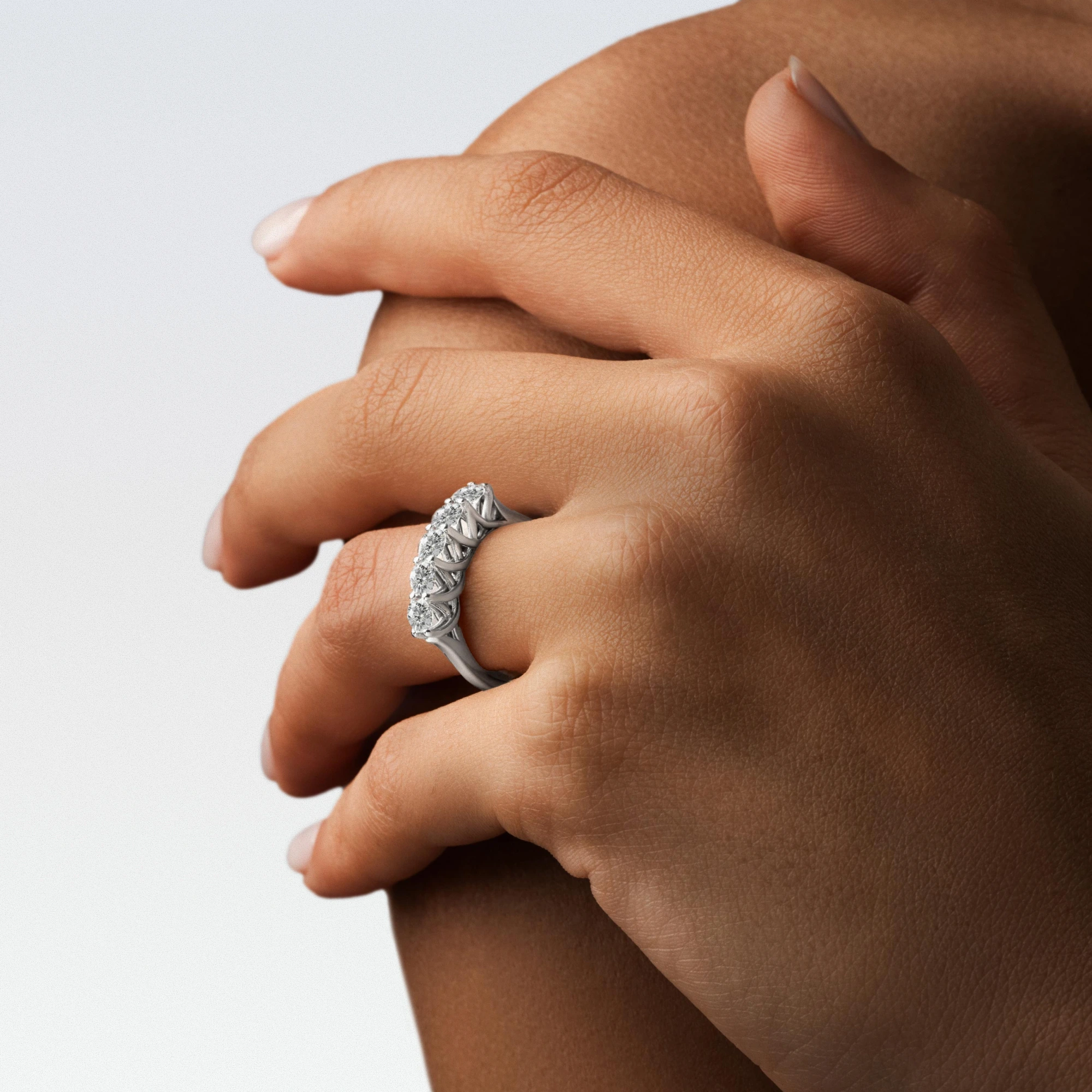
Hands wearing a white-gold three-stone diamond ring

RING SIZE GUIDE

Use the ASAROGA ring size chart and three simple measuring methods to find a comfortable US ring size for engagement rings and wedding bands.

US Ring Size Chart

Use the chart below to compare US and Canadian ring sizes with their corresponding inside diameter and circumference in millimeters. ASAROGA sizing runs from size 3 through size 13 in half-size increments.
Diameter is the straight measurement across the inside of a ring. Circumference is the distance around the inside of the band or around the finger where the ring will sit. Use the measurement that matches your chosen method, then select the closest size on the chart.
Home measurements are a helpful starting point, but small differences matter. A change of less than one millimeter can affect comfort. Repeat the process several times and arrange a professional measurement whenever possible before finalizing an important ring.
US & Canada
Inside Diameter
Inside Circumference
3
14.1 mm
44.2 mm
3.5
14.5 mm
45.5 mm
4
14.9 mm
46.8 mm
4.5
15.3 mm
48.0 mm
5
15.7 mm
49.3 mm
5.5
16.1 mm
50.6 mm
6
16.5 mm
51.9 mm
6.5
16.9 mm
53.1 mm
7
17.3 mm
54.4 mm
7.5
17.7 mm
55.7 mm
8
18.1 mm
57.0 mm
8.5
18.5 mm
58.3 mm
9
18.9 mm
59.5 mm
9.5
19.4 mm
60.8 mm
10
19.8 mm
62.1 mm
10.5
20.2 mm
63.4 mm
11
20.6 mm
64.6 mm
11.5
21.0 mm
65.9 mm
12
21.4 mm
67.2 mm
12.5
21.8 mm
68.5 mm
13
22.2 mm
69.7 mm
US and Canada ring-size chart showing inside diameter and circumference for sizes 3 through 13

Method 1: Measure Your Finger

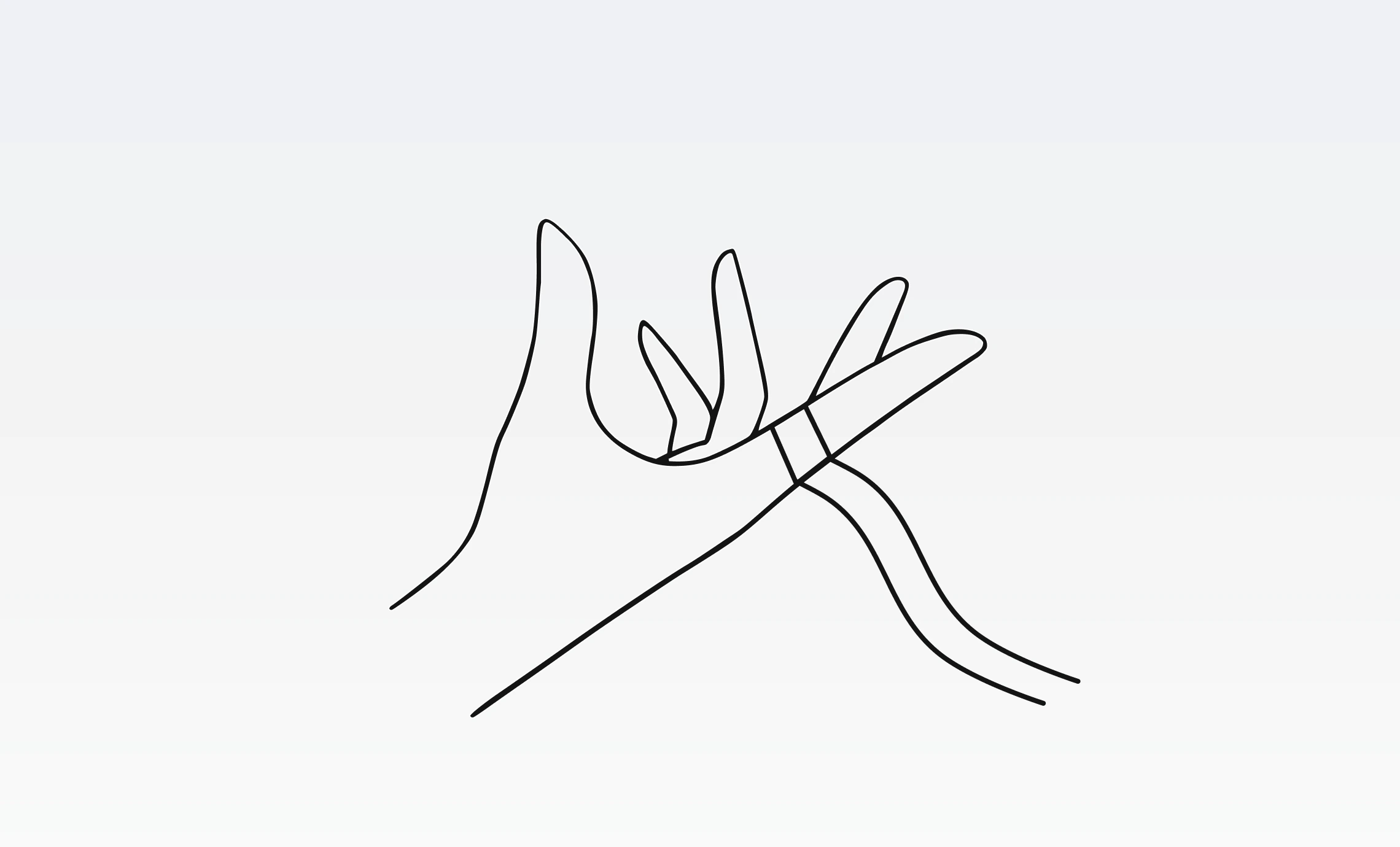
Wrap a narrow strip of non-stretch paper or flexible measuring tape around the base of the finger. It should sit where the ring will rest and feel snug without pressing into the skin.
Mark the exact point where the ends meet, then lay the strip flat and measure the length in millimeters. This number is the finger circumference. Compare it with the circumference column in the ASAROGA ring size chart.
Measure the specific finger on the correct hand. The same finger can differ slightly between hands, and the dominant hand may be larger. If the knuckle is wider than the finger base, measure both areas and choose a size that can pass the knuckle while remaining secure below it.
Repeat the measurement at least three times. If the result falls between sizes, the larger half size is usually the safer starting point, especially for wider bands. A jewelry specialist can help refine the choice.
Illustration showing a strip wrapped around a finger for measurement

Method 2: Measure a Ring You Already Own

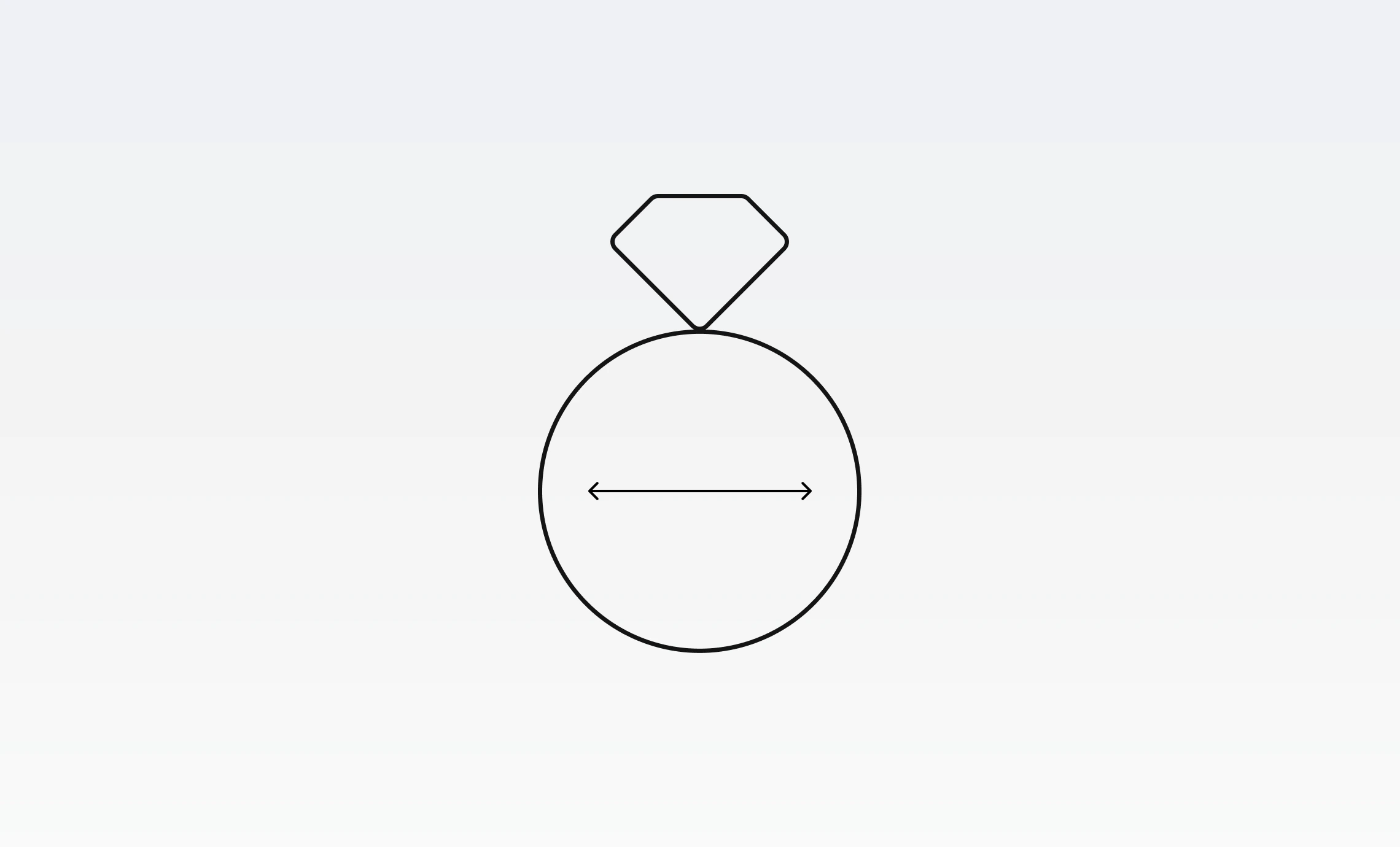
Choose a ring that already fits the intended finger comfortably. Place it on a flat surface and measure straight across the widest part of the inner opening in millimeters. Do not include the metal edges.
The measurement must pass through the exact center of the circle. Even a slight diagonal angle can produce a larger result. Compare the number with the inside diameter column and select the nearest corresponding US size.
This method is useful for a discreet or surprise measurement, but only if the borrowed ring is worn on the same finger and hand. A ring from another finger can create a misleading result even when it appears similar in size.
Illustration showing where to measure the inside diameter of a ring

Method 3: Use the Printable Ring Sizer

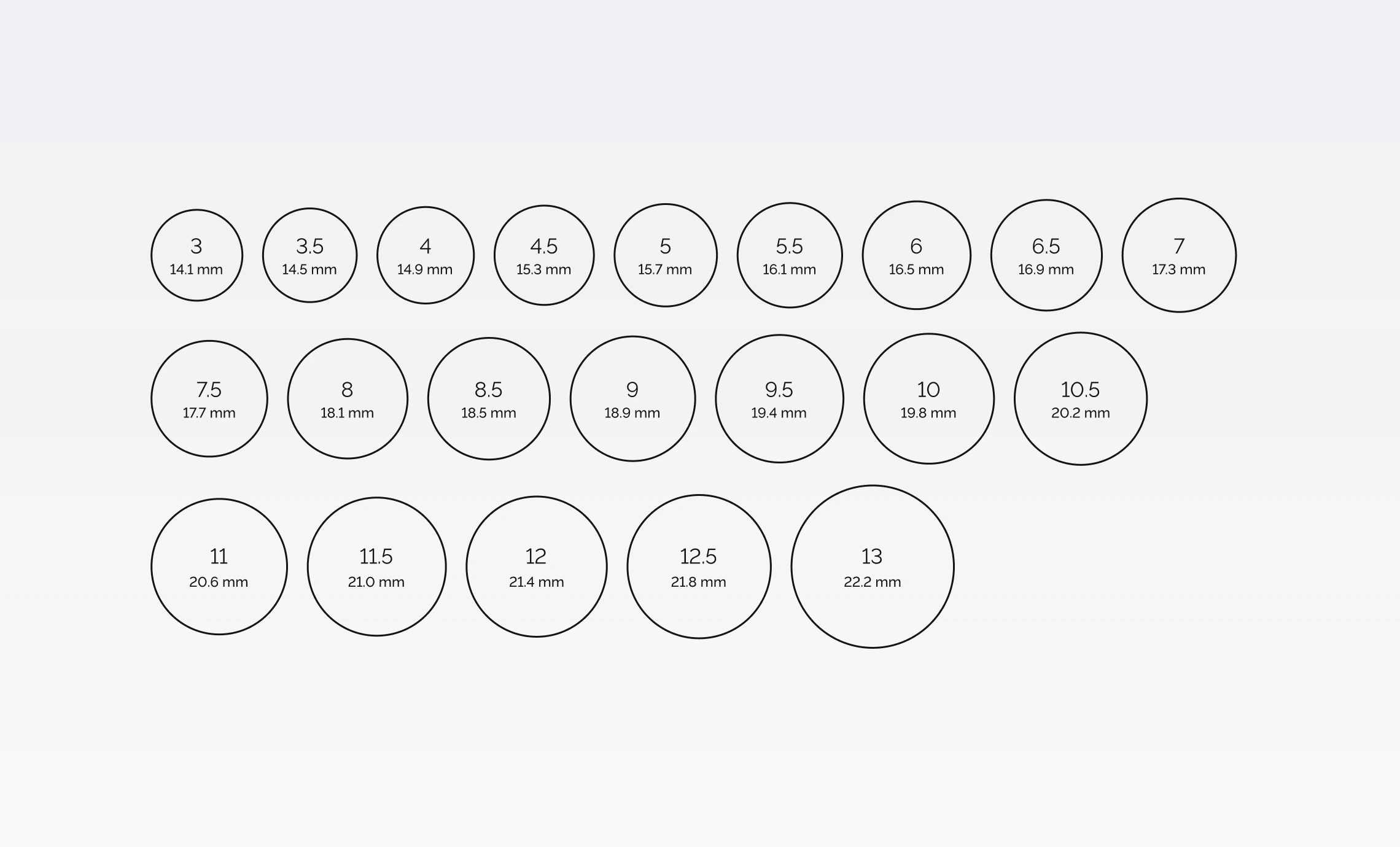
Download the printable ASAROGA ring sizer, print it on standard paper, and set the printer to 100 percent or actual size. Do not use fit-to-page scaling. The PDF includes a credit-card calibration outline that must be checked before using its size circles.
Check the printed calibration mark before measuring. Place a ring over the circles until its inside edge aligns as closely as possible with one outline. The circle should remain visible immediately inside the ring without a gap.
Never estimate size by holding a ring against the guide on a phone or computer screen. Display scaling changes the dimensions. The guide must be printed correctly for the circles to represent accurate millimeter measurements.
Printable ring-size circles from US size 3 through 13

How Should a Ring Fit?

A correctly sized ring should slide over the knuckle with gentle resistance and sit securely at the base of the finger. It should not spin constantly, leave a deep indentation, or feel difficult to remove under normal conditions.
Some movement is natural because fingers are not perfectly round and can change throughout the day. A top-heavy engagement ring may rotate more than a plain band even when the size is technically correct. Band width, ring weight, and setting height all influence the sensation of fit.
If the ring passes the knuckle easily but feels loose at the base, sizing beads or another adjustment may offer a better result than reducing the entire ring. A jeweler can evaluate the ring design and finger shape together.

When to Measure Your Finger

Finger size changes with temperature, hydration, activity, travel, and time of day. Cold conditions can make fingers temporarily smaller, while heat, exercise, or fluid retention can make them larger.
Measure at a comfortable room temperature, ideally later in the day when the hands have settled into a more typical size. Avoid measuring immediately after exercise, exposure to extreme temperatures, or any period of noticeable swelling.
Take measurements on more than one day. A size that remains comfortable across several readings is more dependable than a single result taken under unusual conditions.

Wide Bands and Stacking Rings

A wide ring covers more of the finger and often feels tighter than a narrow band in the same nominal size. Depending on width, shape, and personal preference, it may require a slightly larger size for comfortable movement.
Stacked engagement rings and wedding bands can create a similar effect because several rings occupy more space together. Try the intended combination whenever possible rather than sizing each ring only in isolation.
Comfort-fit interiors, flat inner profiles, eternity diamonds, and decorative edges can also change how a band feels. The size chart provides the measurement foundation, while the final design determines how that size should be interpreted.

Finding a Ring Size for a Surprise Proposal

For a surprise proposal, discreetly borrow a ring worn on the intended ring finger and measure its inside diameter. Confirm which hand and finger it belongs to before relying on the result.
A trusted friend or family member may be able to ask naturally or arrange a casual jewelry visit. Existing order records can also help if the wearer has previously purchased a ring that fits the same finger.
Avoid relying only on height, shoe size, or an average ring size. These do not reliably predict a person's finger measurement. If an exact size cannot be confirmed, choose a design that allows adjustment and discuss the safest starting size with a specialist.

Final Sizing and Resizing

Before ordering, confirm the size against the exact ring design. Some eternity bands, highly detailed settings, two-tone constructions, and rings with stones around the full circumference have limited resizing ranges or may not be resizable.
When uncertainty remains, professional measurement is the most reliable final step. A jeweler can use calibrated sizing rings, account for knuckle and finger shape, and consider the width and profile of the chosen piece.
If a completed ring needs adjustment, the appropriate solution depends on its structure, metal, stones, and amount of change required. Contact ASAROGA to confirm current resizing eligibility and the options available for the individual design.
Ring size is a small measurement with a significant effect on daily wear. Taking time to measure carefully helps the finished engagement ring or wedding band feel secure, comfortable, and natural from the first day onward.
Continue by comparing engagement ring styles, or explore engagement rings and wedding bands.