DIAMOND CERTIFICATION GUIDE
Learn how to read a diamond grading report, compare GIA and IGI certification, verify report numbers, and understand what a certificate proves.
What Diamond Certification Really Means
The phrase diamond certificate is commonly used, but an independent laboratory usually issues a grading report rather than a guarantee or certificate of value. The report records the laboratory's professional assessment of the diamond at the time it was examined.
A reliable report gives a loose diamond an independent identity. It documents measurable characteristics, discloses whether the diamond is natural or laboratory grown, and provides a reference that can be checked before purchase and kept with the jewelry afterward.
Certification does not make one diamond beautiful and another unattractive. It creates transparency. By confirming the qualities being represented, a grading report allows two diamonds to be compared more clearly and helps the buyer understand what is included in the price.
How a Diamond Is Graded
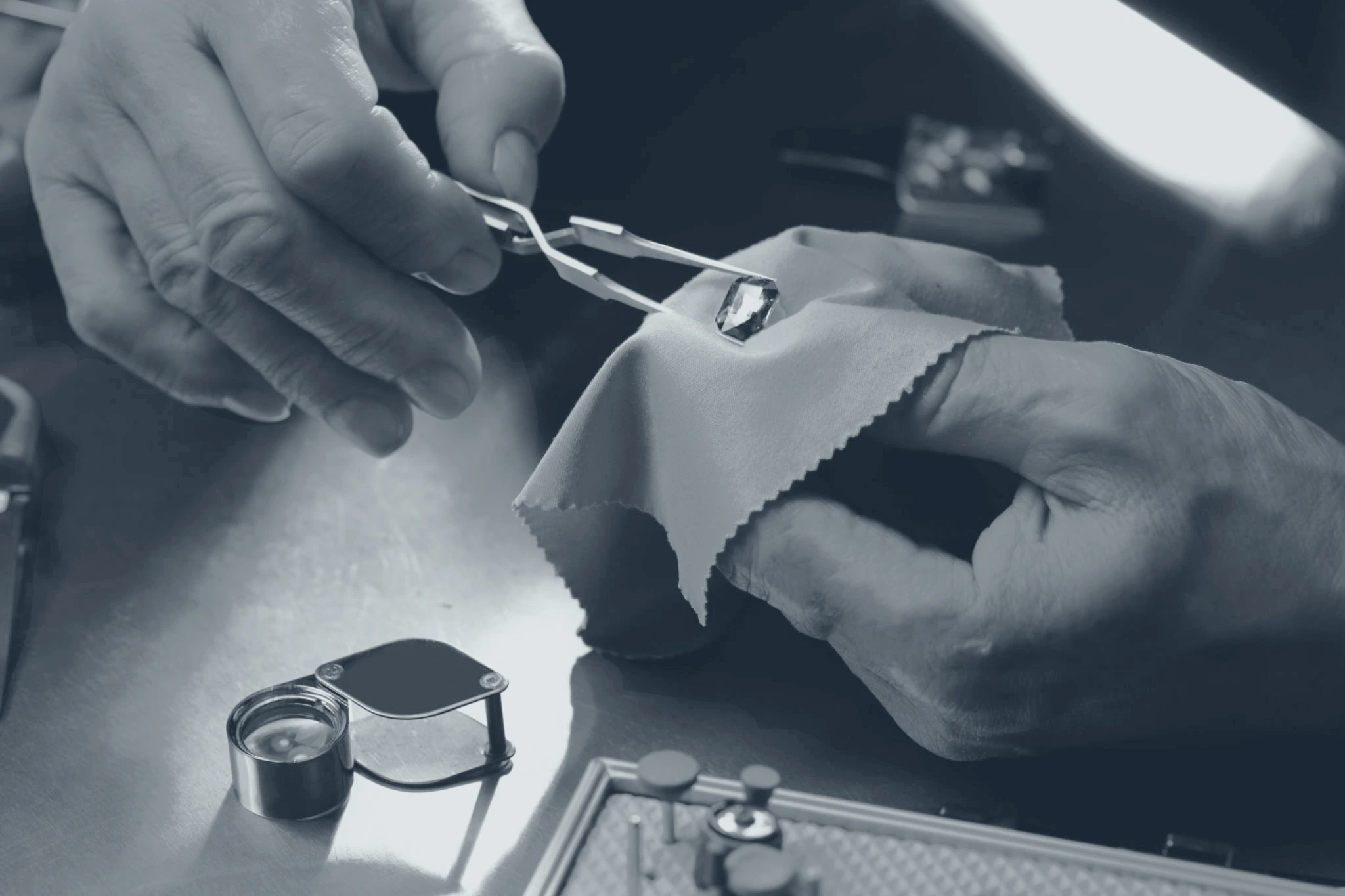
At an independent gemological laboratory, trained graders examine a diamond under standardized conditions using magnification, controlled lighting, calibrated instruments, and reference stones. The process is designed to reduce subjectivity and produce a consistent description of the stone.
The reported categories depend on the laboratory, service, shape, and diamond origin. Natural-diamond reports commonly record carat weight, color, clarity, measurements, polish, symmetry, fluorescence, and cut grade where the laboratory has an applicable system. GIA’s current D-to-Z laboratory-grown service instead uses Premium or Standard quality assessments for eligible stones.
The diamond is normally graded loose because a setting can hide inclusions, affect apparent color, and prevent exact measurements. Laboratories do not grade the quality of the ring or guarantee future condition. Their role is to describe the submitted diamond as accurately as their standards allow.

How to Read a Diamond Grading Report
Begin with the report number and date, then confirm the diamond's stated origin, shape, cutting style, measurements, and carat weight. These details establish the stone's basic identity. The measurements are especially useful because two diamonds with the same carat weight can have different visible dimensions.
Next, review the 4Cs. Color and clarity record the assigned grades. Cut grade, when provided, summarizes several aspects of proportion and finish but should still be considered alongside the detailed measurements. Polish and symmetry describe the quality of the finished surfaces and facet alignment.
A proportions diagram may show table size, total depth, crown angle, pavilion angle, girdle, and culet. A clarity plot or comments section can identify inclusions and blemishes. Fluorescence records the diamond's reaction to long-wave ultraviolet light, not how strongly it sparkles in ordinary conditions.
Finally, look for comments, treatments, growth method disclosures, and laser inscription information. Important details can appear outside the main grading box. Read the complete report rather than relying only on the headline grades.
GIA and IGI Diamond Reports
GIA, the Gemological Institute of America, and IGI, the International Gemological Institute, are two widely recognized independent gemological laboratories. Both issue reports for diamonds, although their report formats, terminology, services, and grading policies can differ and may evolve over time.
GIA is closely associated with the modern 4Cs and is widely used for natural diamonds. Since October 1, 2025, its eligible D-to-Z laboratory-grown diamond service has used Premium or Standard assessments rather than the natural-diamond color and clarity nomenclature. IGI issues reports for both natural and laboratory-grown diamonds and may present conventional grades, so compare the exact service and terminology shown on each report.
A laboratory name should not replace careful review. Confirm which report was issued, what it covers, whether the diamond's origin is clearly disclosed, and how its grades correspond to the actual stone. Compare diamonds using reports from recognized laboratories and then evaluate their visible beauty in person or through dependable imaging.
Grading is a professional opinion based on established standards, not a mathematical absolute. Small differences can occur between laboratories or submissions. Consistency, independence, and accurate disclosure are more important than selecting a report only because its grades appear higher.
How to Verify a Diamond Report
Use the issuing laboratory’s official service to verify the report number. Check a GIA document through GIA Report Check or an IGI document through IGI report verification, then confirm that the online shape, measurements, carat weight, origin, and other listed details match the document and diamond being offered.
Many graded diamonds have a microscopic report number laser inscribed on the girdle. A jeweler can locate it under magnification. The inscription should match the report, but it should be considered together with the stone's measurements and identifying characteristics rather than treated as the only proof.
Be cautious if a seller provides only a cropped image, an unreadable copy, or a number that cannot be verified. A grading report belongs to a specific diamond. A genuine report presented with the wrong stone does not provide valid assurance.
Keep the report number and a secure digital copy after purchase. The information may be useful for insurance, maintenance records, future identification, or replacement discussions if the original document is misplaced.
Grading Report, Appraisal, and Certificate of Authenticity
A grading report, an appraisal, and a retailer's certificate serve different purposes. An independent grading report describes the diamond. An appraisal estimates monetary value for a stated purpose and date, often for insurance. It may consider the complete piece, including metal, craftsmanship, and additional stones.
An ASAROGA Certificate of Authenticity records the finished piece and confirms the product details represented by ASAROGA. It accompanies the jewelry as a brand and ownership record. It does not replace an independent diamond grading report when one is provided for the center stone.
These documents are most useful when they support one another. The laboratory report identifies and grades the diamond. The ASAROGA certificate connects the materials and specifications to the finished jewelry. An independent appraisal can establish a value for insurance when required.
Keep each document with your purchase records, but store copies separately from the jewelry. Clear documentation protects the history of the piece and makes future service, insurance, and identification easier.

What a Report Cannot Tell You
A grading report does not assign retail price, guarantee resale value, or tell you whether a diamond will appeal to your eye. It cannot fully communicate contrast, transparency, facet character, or how the stone performs as it moves through changing light.
Two diamonds with matching 4Cs can look different because the report condenses a complex three-dimensional object into a set of grades and measurements. One may show broader flashes, another finer scintillation. Inclusion placement and the visibility of color can also differ within the same grade.
Use certification to confirm facts, then judge beauty as a complete experience. Look at the diamond, understand the report, consider the setting, and ask questions about anything that is unclear. Documentation should support an informed decision, not make the decision for you.
A Confident Final Check
Before choosing a diamond, verify the report through the laboratory, confirm the disclosed origin, match the report number and measurements, review all comments, and understand whether the stone has received any treatment. Ask for clarification when a detail is missing or difficult to interpret.
Then return to what you can see. Strong cut, balanced proportions, appealing color, suitable clarity, and the right face-up presence matter more than pursuing a report filled with the highest possible grades.

Diamond certification is most valuable when it replaces uncertainty with knowledge. A trustworthy report, accurate disclosure, and careful visual evaluation allow you to compare confidently and choose a diamond for both the qualities documented on paper and the beauty that exists beyond it.
Build on this guide with the 4Cs of diamonds, compare lab-grown and natural diamonds, or browse available diamonds.