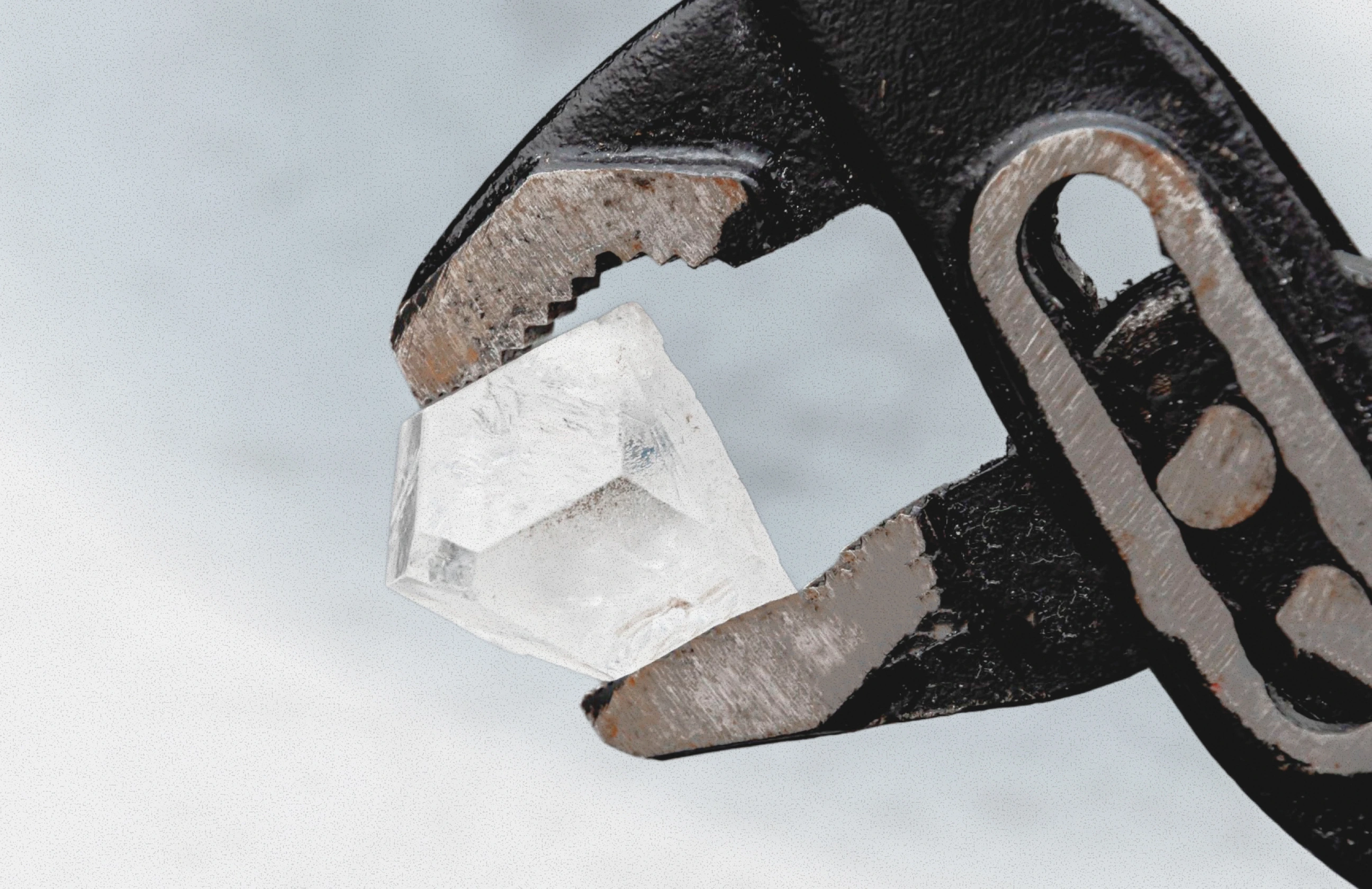
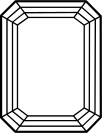
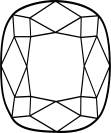
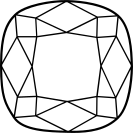
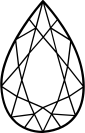
Rough diamond held carefully in a metal tool

LAB-GROWN VS. NATURAL DIAMONDS

Compare lab-grown and natural diamonds by origin, quality, price, certification, and environmental considerations to choose with confidence.

The Short Answer

Natural and lab-grown diamonds are both real diamonds. They share the same essential chemical composition, carbon arranged in a crystal structure, and they can display the same hardness, brilliance, fire, and range of quality grades. The defining difference is origin.
A natural diamond forms deep within the earth through geological processes. A lab-grown diamond develops in a controlled environment using technology that recreates the conditions needed for diamond crystal growth. Once cut and polished, the two can look identical to the unaided eye.
Neither origin is automatically the right choice for everyone. Natural diamonds offer geological rarity and a history formed by the earth. Lab-grown diamonds can offer more size or higher grades within the same initial budget. The better choice depends on what rarity, value, sourcing, and personal meaning represent to you.

How Natural Diamonds Form

Natural diamonds began forming far beneath the earth's surface under immense heat and pressure, often billions of years ago. Volcanic activity later carried some crystals closer to the surface, where they could eventually be discovered and recovered.
Their age and geological origin are central to their appeal. Every natural diamond is the result of conditions that occurred independently of human design. Its inclusions can preserve tiny traces of that formation history, while its final shape and brilliance emerge only after skilled planning, cutting, and polishing.
Natural diamond sourcing involves a complex chain that can include mining, sorting, cutting, grading, and distribution across several countries. Responsible selection therefore requires attention to documentation, supplier practices, and the standards applied throughout that journey.

How Lab-Grown Diamonds Are Created

Lab-grown diamonds begin with a small diamond seed and are developed using one of two primary methods. High Pressure High Temperature, known as HPHT, recreates intense pressure and heat. Chemical Vapor Deposition, known as CVD, builds diamond crystal layer by layer from a carbon-rich gas.
Growth may take weeks, depending on the method and desired crystal. The rough material is then cut, polished, and graded through processes similar to those used for natural diamonds. Lab-grown does not mean imitation. Materials such as cubic zirconia and moissanite are diamond alternatives with different chemical and optical properties.
Technology continues to improve the consistency and scale of lab-grown production, but quality still varies. A lab-grown diamond can have inclusions, color, strain, or growth characteristics just as a natural diamond can have features created during formation. Each stone should be judged individually.
Diamond growth and processing equipment in a controlled production environment

Same Material, Different Origin

A finished diamond does not announce its origin through sparkle. Natural and lab-grown stones can both be colorless or warm, included or exceptionally clean, and well cut or poorly proportioned. Origin does not determine beauty. The quality of the individual diamond does.
Specialized gemological equipment can identify growth structures, trace elements, fluorescence patterns, and other features that distinguish laboratory growth from natural formation. This is why reliable grading documentation matters. Visual inspection alone, even by an experienced jeweler, may not be enough.
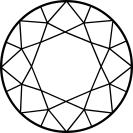
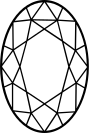
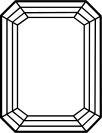
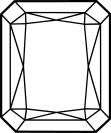
The images shown together reflect the two ideas at the center of this comparison: a diamond's origin and the precision used to understand its finished quality. One story begins in the earth and the other in a controlled growth environment, but both require expert cutting and evaluation before becoming jewelry.
Natural rough diamond resting against dark rock
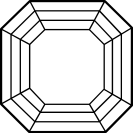
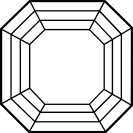
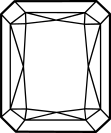
Polished emerald-cut diamond being examined with precision equipment

The 4Cs and Diamond Certification

The 4Cs remain a useful framework for comparing natural and laboratory-grown diamonds, but current report formats are not identical across laboratories. Since October 1, 2025, GIA has described eligible D-to-Z laboratory-grown diamonds as Premium or Standard rather than assigning the traditional natural-diamond color and clarity nomenclature. IGI and other laboratories may use different reporting systems.
Cut remains essential for either origin because it governs how effectively the finished diamond returns light. Color and clarity should be considered in relation to what is visible, not only the grade printed on a report. Carat measures weight, while actual dimensions reveal how large the stone appears.
Reports from recognized independent gemological laboratories provide valuable confirmation and a permanent reference number. Always check that the report number, measurements, identifying details, and disclosed origin correspond to the diamond being considered.

Price, Rarity, and Future Value

Lab-grown diamonds generally cost less at the time of purchase than natural diamonds with comparable shape, size, and grades. This can make a larger carat weight or higher color and clarity combination accessible within a set budget.
Natural diamonds usually carry a higher price because of geological rarity, recovery costs, and established market demand. Lab-grown supply can expand as production technology improves, which has contributed to changing retail prices. Their secondary market is still developing and resale values can be uncertain.
No diamond should be presented as a guaranteed financial investment. Prices and resale outcomes depend on market conditions, the individual stone, documentation, and where it is sold. If long-term market value is an important priority, understand the differences before deciding and focus first on buying a diamond you will want to keep.

Environmental and Social Considerations

The word sustainable should not be assigned automatically to either origin. Natural diamond recovery can affect land, water, ecosystems, and communities. The scale and management of those effects vary by mine, location, regulation, and operator.
Lab-grown production avoids mining the diamond itself, but it requires energy and industrial equipment. Its environmental profile depends heavily on the production method, facility efficiency, electricity source, and the evidence available to support any environmental claim.
Responsible comparison requires more than a general label. Ask what can be documented about origin, energy, labor, and supplier practices. Transparency and verifiable information are more useful than assuming that every natural diamond has the same impact or that every lab-grown diamond has none.

Which Diamond Is Right for You?

Choose a natural diamond if geological rarity, ancient origin, and the established natural diamond market are central to the meaning of the piece. Choose a lab-grown diamond if initial price, greater size within budget, or a technology-created origin better reflects your priorities.
Then evaluate the individual stone. Compare cut and light performance, view color in the intended metal, confirm that clarity characteristics do not distract or create durability concerns, and compare face-up dimensions alongside carat weight. Origin is important, but it does not replace quality.
Consider the complete piece as well. A secure setting, balanced proportions, skilled craftsmanship, and a design you will continue to wear matter regardless of how the diamond formed. Both origins deserve accurate disclosure and the same care in selection.
The choice is personal, not a contest between real and unreal. Natural and lab-grown diamonds offer different stories and different value propositions. Understanding those differences allows you to select with confidence and give the finished jewelry meaning on your own terms.
Continue with the 4Cs of diamonds, learn how to verify diamond grading reports, and review ASAROGA’s approach to Sustainability.