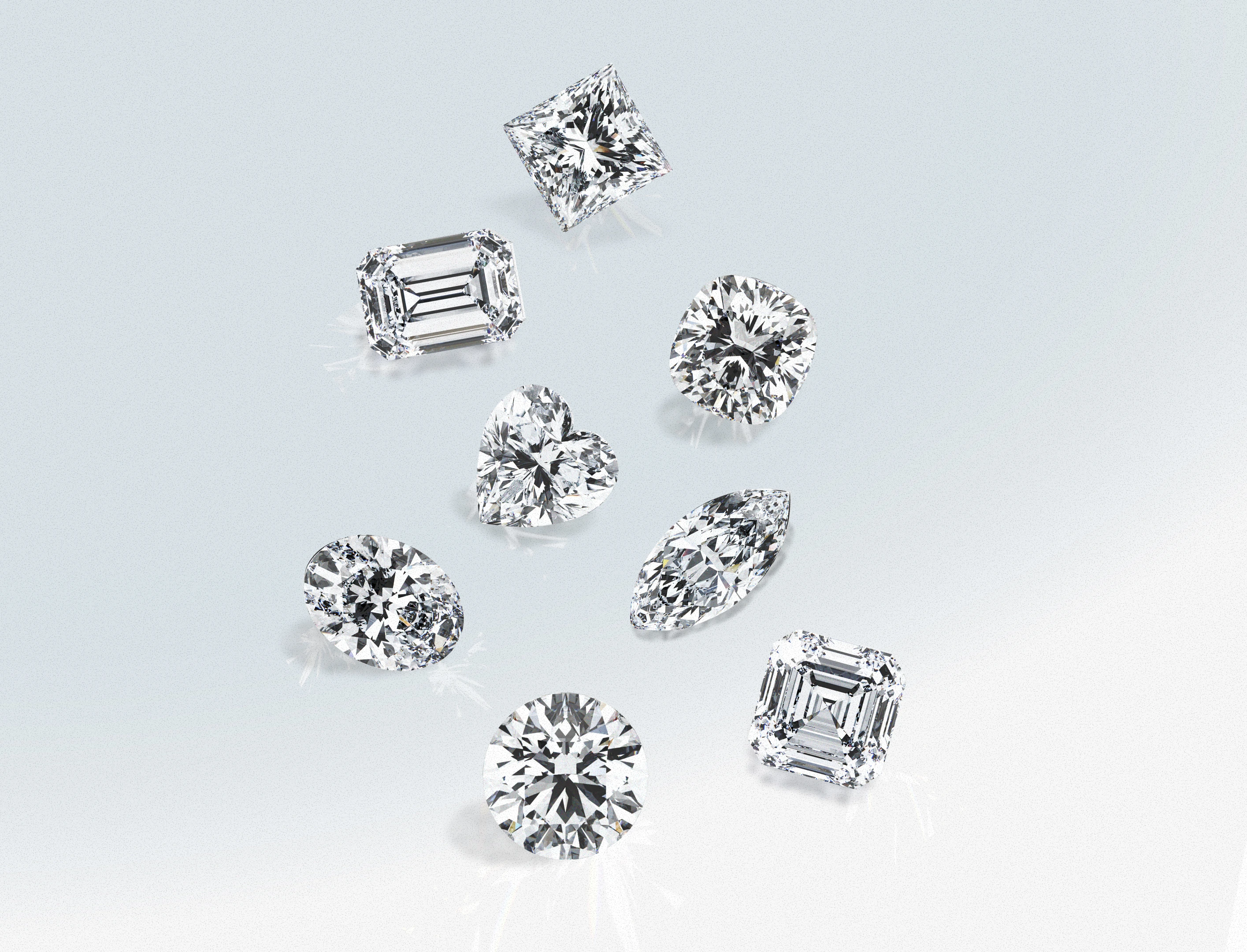
Collection of round and fancy-shaped loose diamonds

DIAMOND SHAPE GUIDE

Compare round, oval, emerald, radiant, elongated cushion, cushion, pear, marquise, Asscher, and princess diamonds to find your shape.

Understanding Diamond Shapes

Diamond shape is the outline you see when looking at a stone from above. Round, oval, emerald, pear, and cushion are shapes. Cut quality describes how successfully the facets and proportions handle light. The two ideas are related, but they are not the same.
Shape influences far more than appearance. It changes how large a diamond looks for its carat weight, how it reflects light, how readily it shows color or inclusions, and which setting will protect it best. It also gives an engagement ring much of its personality.
There is no single best diamond shape. The right choice depends on the kind of brilliance, proportion, and character that feels most natural to you. This guide follows the same shape order used throughout ASAROGA so comparisons remain clear and consistent.

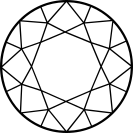
Round Diamond

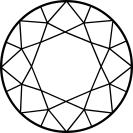
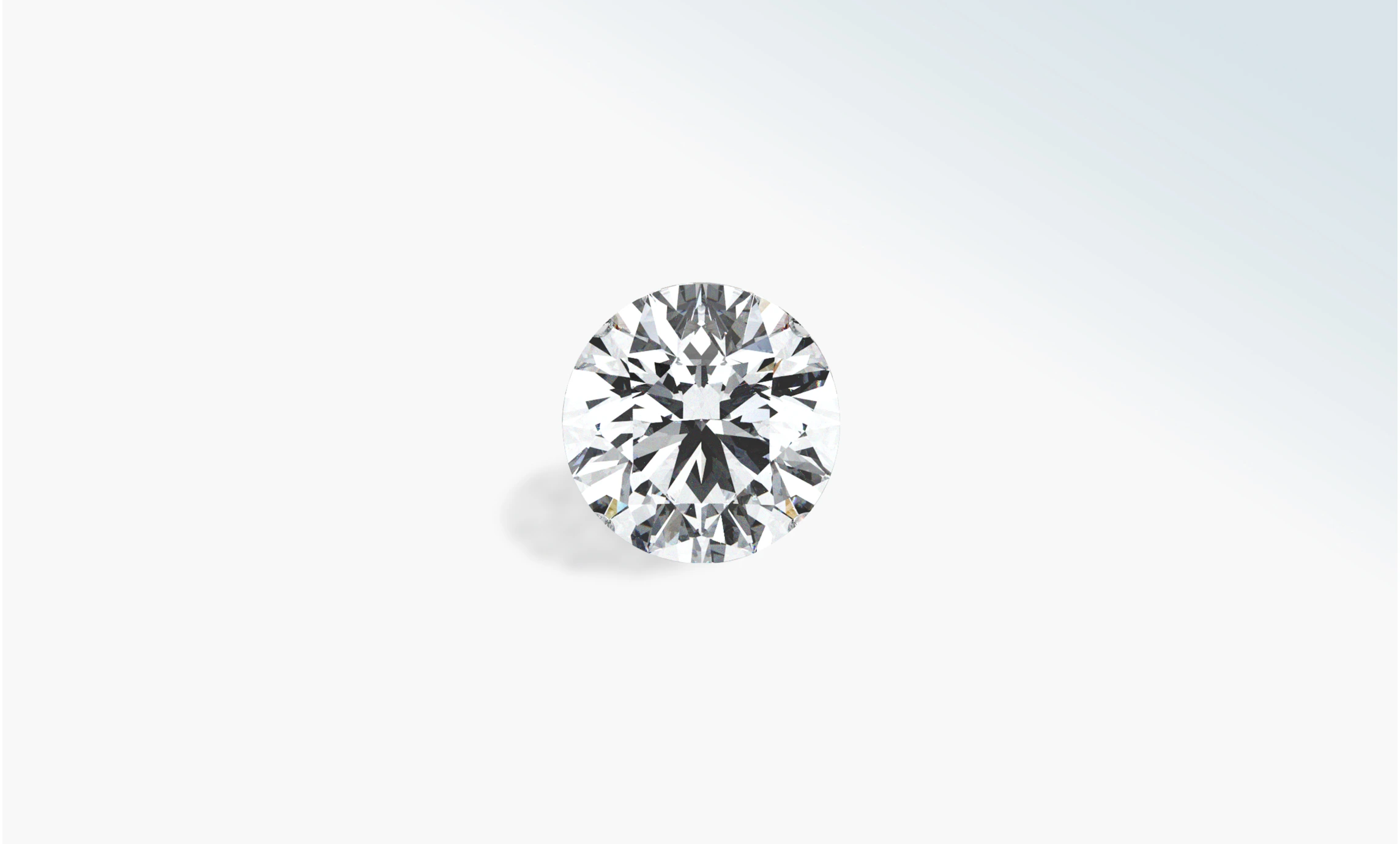
The round brilliant is the most recognized diamond shape and the benchmark for sparkle. Its symmetrical outline and carefully arranged facets are designed to return a high level of brightness, fire, and scintillation when the proportions and finish are strong.
Round diamonds benefit from the most established cut research and grading standards. That makes their light performance easier to compare than many fancy shapes. Because cutting a round stone usually removes more of the original rough, round diamonds can command a higher price per carat than shapes with greater yield.
This shape works with nearly every setting, from a simple solitaire to a detailed halo or pavé band. Its visual balance feels timeless, and its lack of pointed corners makes it practical for frequent wear. For buyers who place brilliance first, round remains the natural starting point.
Loose round brilliant diamond on a pale background

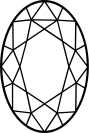
Oval Diamond

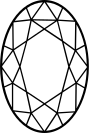
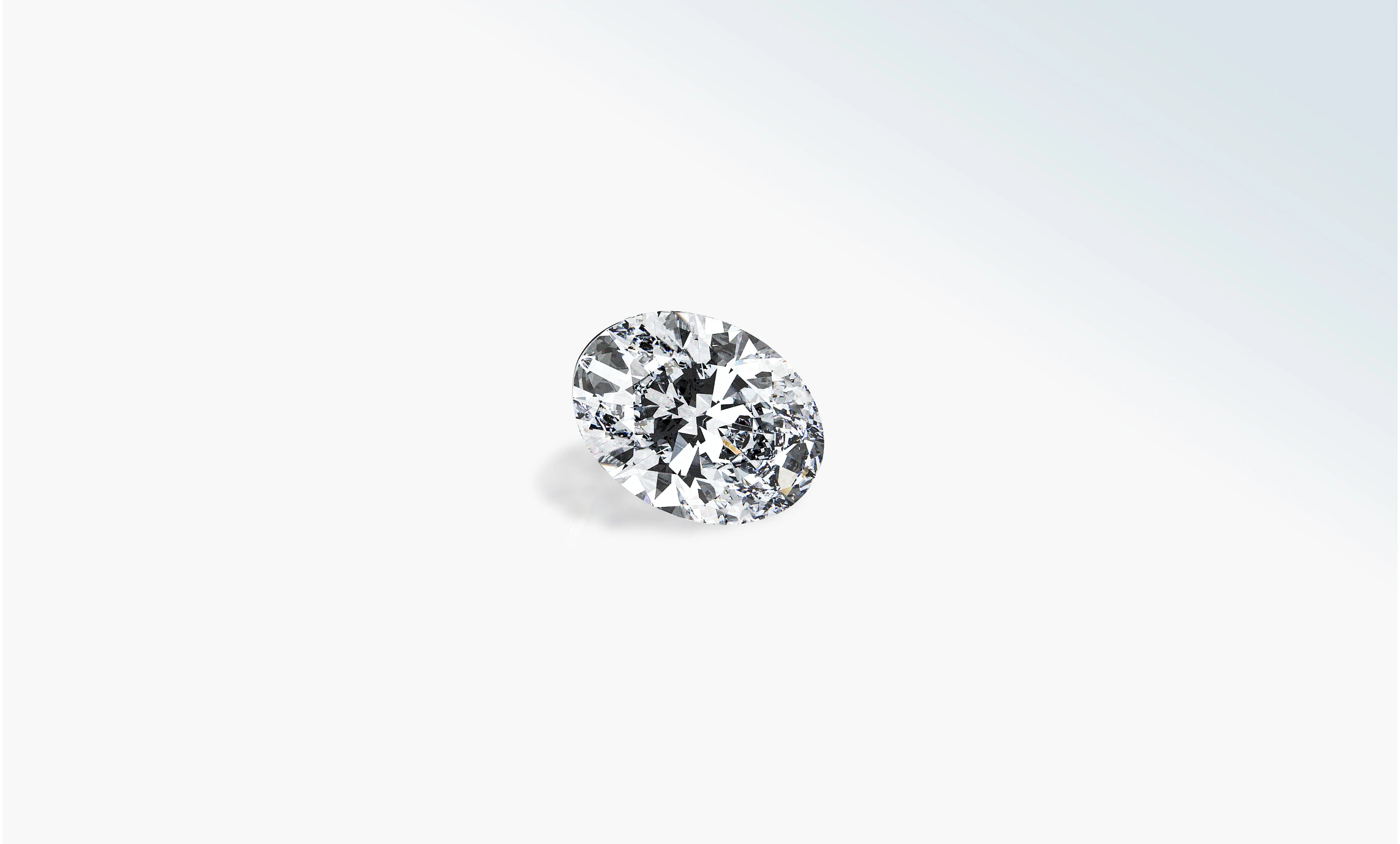
The oval diamond offers brilliant-style sparkle in an elongated silhouette. Its curves feel soft and balanced, while its greater face-up spread can make it appear larger than a round diamond of similar carat weight. The length can also create a graceful, lengthening effect on the finger.
Oval outlines range from softly rounded to narrow and slender. Personal preference determines the ideal length-to-width ratio, but symmetry should remain strong and the ends should feel evenly matched. Nearly every oval shows some degree of bow tie through the center, so compare how prominent it appears in different lighting.
An oval adapts easily to solitaires, halos, three-stone settings, and east-west designs. It can feel traditional or contemporary depending on the setting around it. Buyers who want lively brilliance with more visual coverage often find oval an effective balance of presence and versatility.
Loose oval brilliant diamond on a pale background

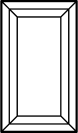
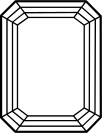
Emerald-Cut Diamond

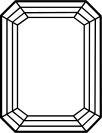
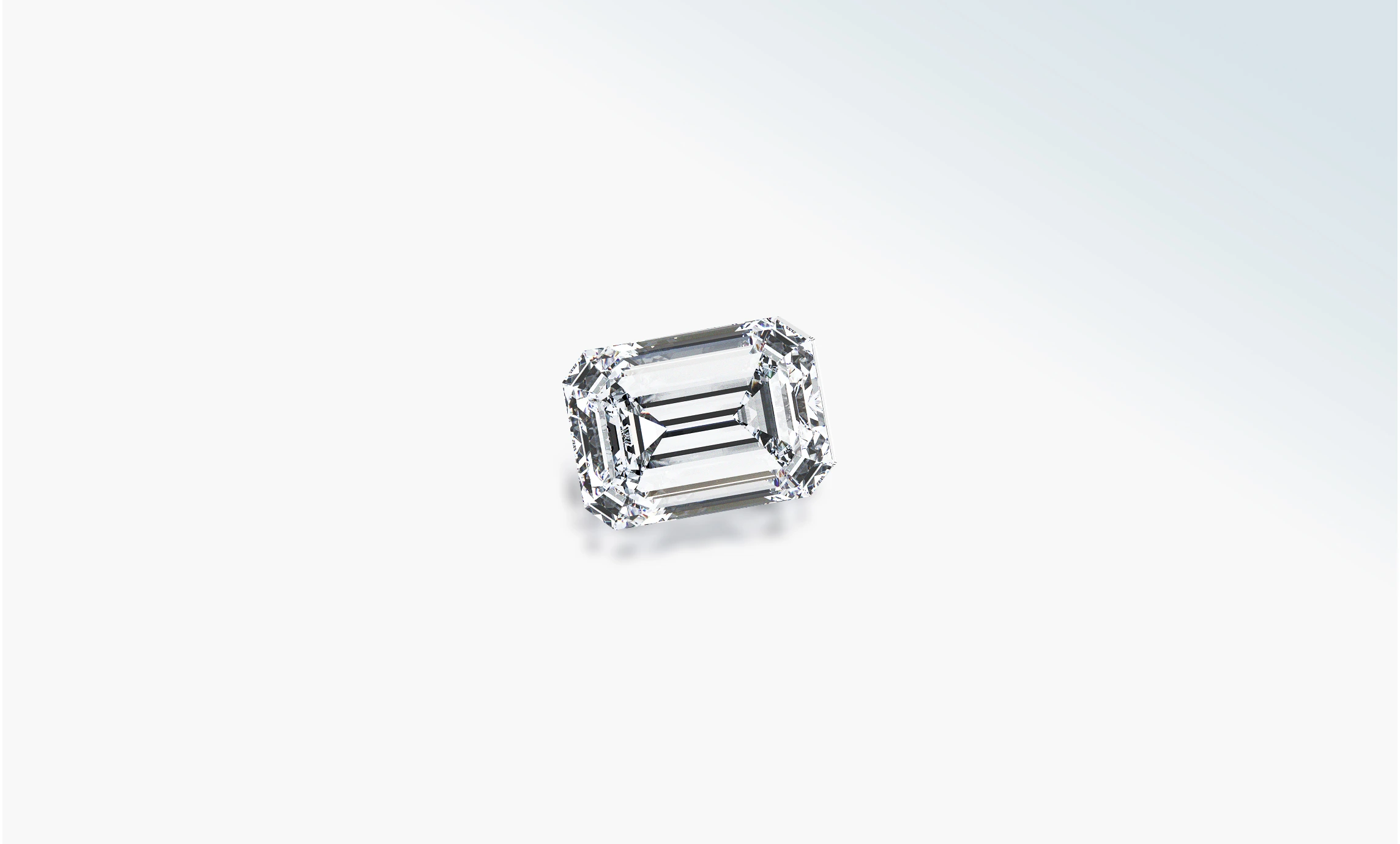
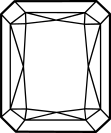
The emerald cut is rectangular with cropped corners and long, parallel step facets. Instead of the rapid sparkle of a brilliant cut, it creates broad flashes of light and a reflective hall-of-mirrors effect. Its beauty is calm, architectural, and immediately distinctive.
The open facet pattern makes transparency important. Color and inclusions may be easier to notice than they are in a highly faceted brilliant shape, so each emerald-cut diamond should be assessed closely rather than selected by the report alone. Symmetry and an even sequence of light and dark reflections also matter.
Length-to-width ratio determines whether the outline appears slender, balanced, or closer to square. A classic rectangular proportion can create elegant finger coverage without relying only on carat weight. Emerald cuts suit clean solitaires, side-stone designs, and refined settings that echo their strong geometry.
Loose rectangular emerald-cut diamond on a pale background

Radiant-Cut Diamond

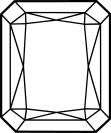
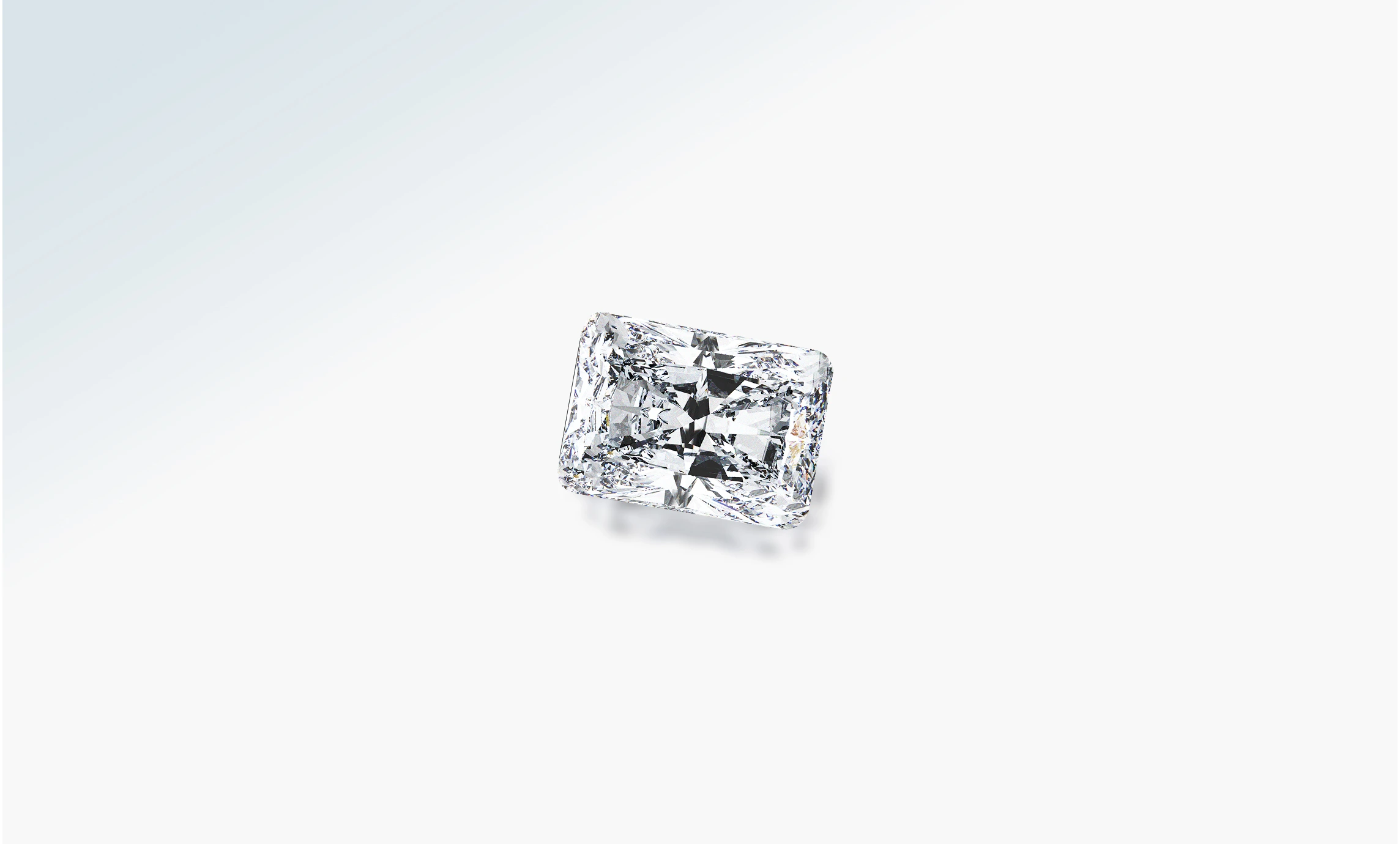
The radiant cut combines a rectangular or square outline with clipped corners and a brilliant facet pattern. It offers the clean geometry of an emerald shape with a livelier, more fragmented sparkle. Its corners are less exposed than those of a princess cut, which adds practical strength.
Radiants can display broad flashes, fine crushed-ice scintillation, or a mixture of both. Length-to-width ratio determines whether the stone reads as square, balanced rectangle, or distinctly elongated. Examine brightness across the entire face and watch for large dark areas that remain fixed as the diamond moves.
The dense faceting can help soften the appearance of some color and inclusions, although every stone should still be judged individually. Radiant cuts work beautifully in solitaires and three-stone designs and offer a strong choice for someone who wants both modern structure and abundant sparkle.
Loose rectangular radiant-cut diamond on a pale background

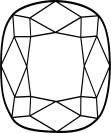
Elongated Cushion-Cut Diamond

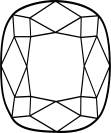
The elongated cushion combines the softened corners of a cushion cut with a longer rectangular outline. It offers the warmth and romance associated with cushion shapes while creating more vertical presence across the finger. The result can feel both classic and distinctly modern.
Elongated cushions vary widely in faceting. Some show broad, defined flashes, while others create a finer crushed-ice texture. Neither appearance is automatically better. The important question is whether light is distributed evenly and whether the facet pattern has the character you prefer.
Length-to-width ratio shapes the personality of the stone. A moderate ratio feels softly elongated, while a higher ratio creates a more dramatic silhouette. Watch for an overly dark bow-tie area through the center and compare actual measurements, since two diamonds of equal carat weight can face up very differently.
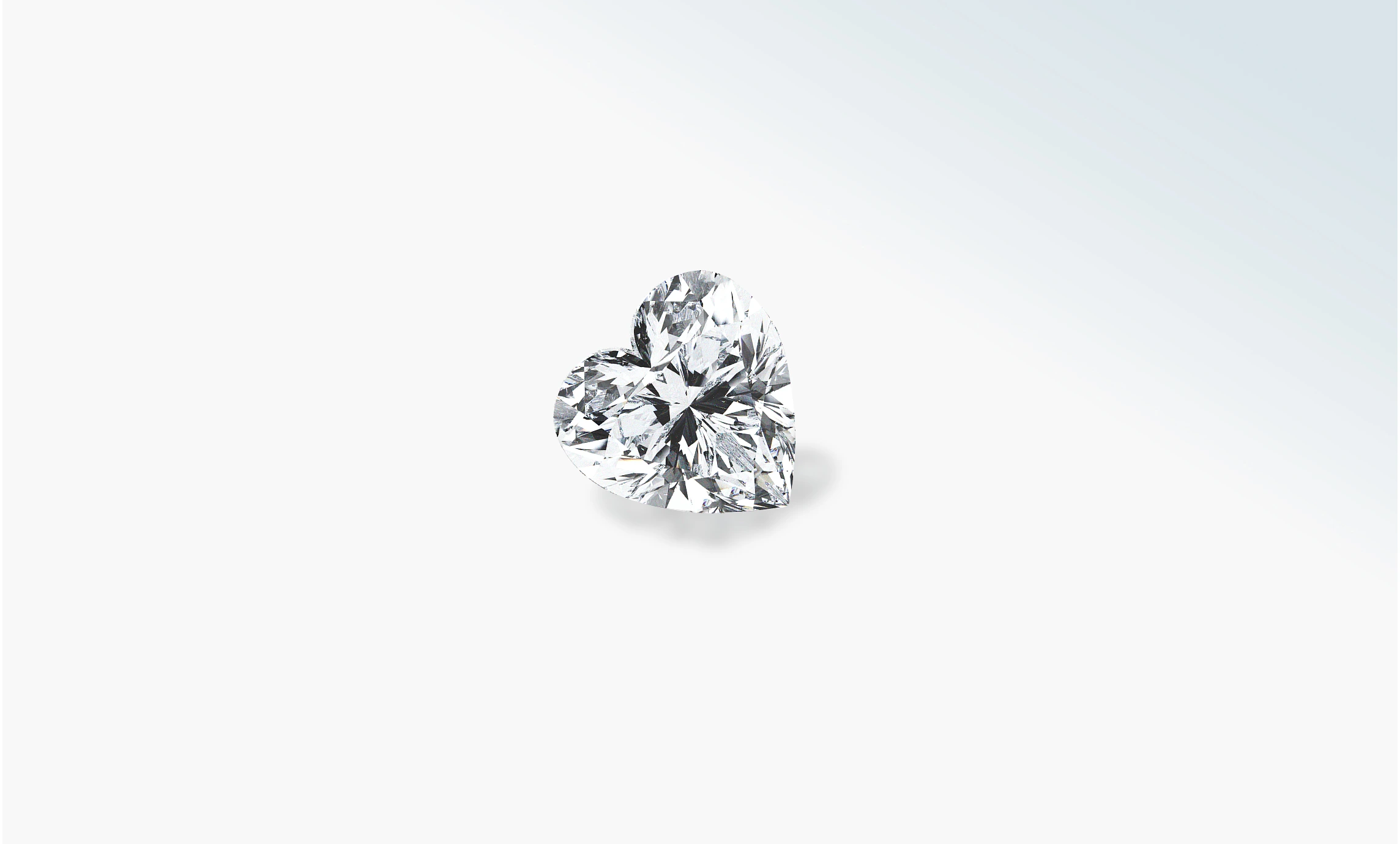
Heart-shaped diamond temporarily representing the upcoming elongated cushion image

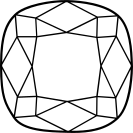
Cushion-Cut Diamond

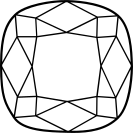
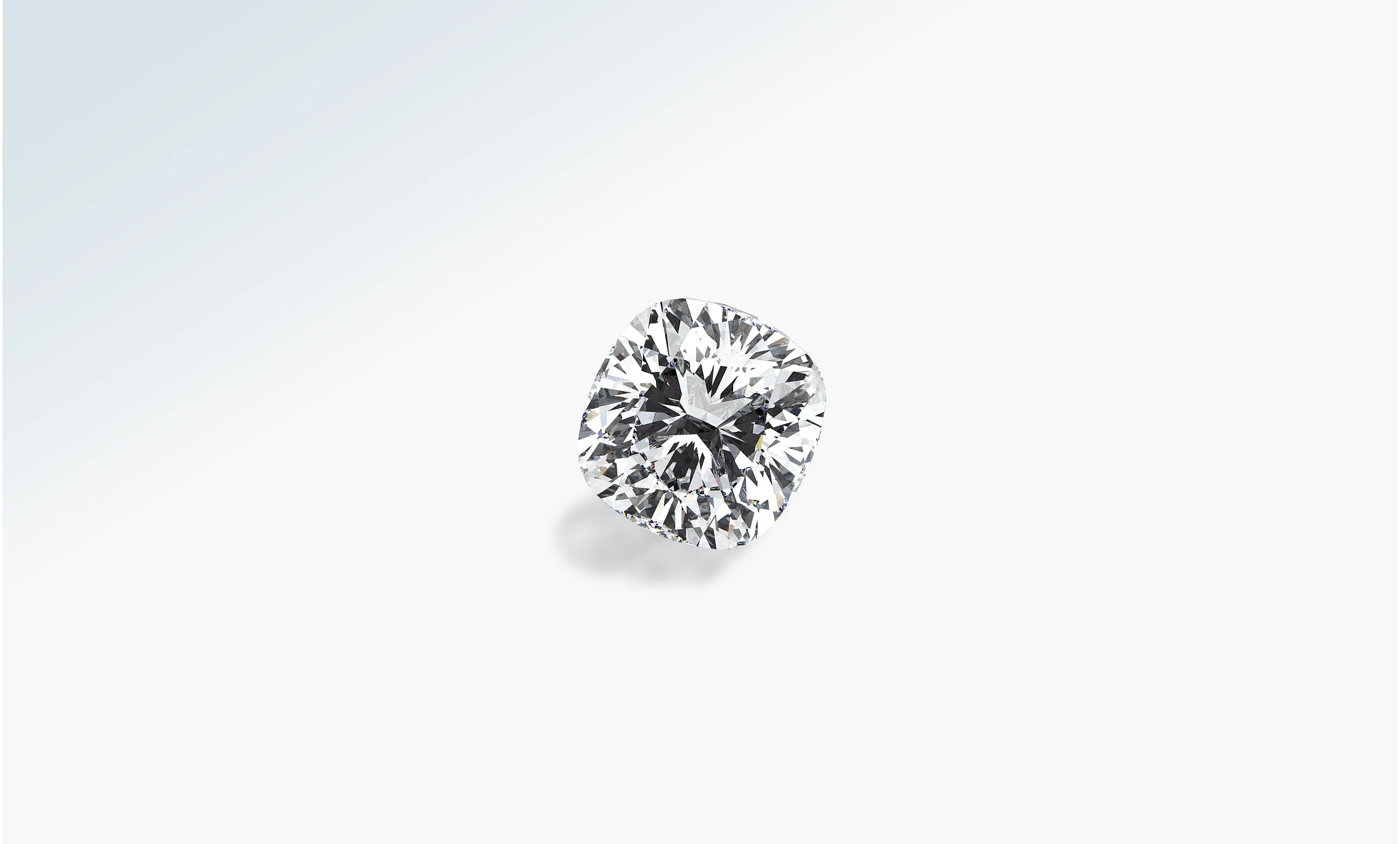
The cushion cut is known for its rounded corners and pillow-like outline. It can be square or slightly rectangular, with a softness that connects antique diamond character to modern brilliance. No two cushions look exactly alike because their proportions and facet patterns vary so widely.
Some cushion diamonds have large, defined facets that create broad flashes. Others show a modified brilliant pattern with a finer crushed-ice effect. Compare stones in motion and decide which visual texture feels more compelling. Also consider how evenly brightness reaches the corners and whether the outline feels balanced.
Cushions can retain warmth more visibly than some brilliant shapes, which may be desirable in yellow or rose gold. Their softened outline suits romantic solitaires, halos, and vintage-inspired settings. For buyers who want character and sparkle without sharp geometry, the cushion offers an expressive middle ground.
Loose cushion-cut brilliant diamond on a pale background

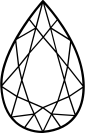
Pear-Shaped Diamond

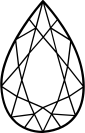
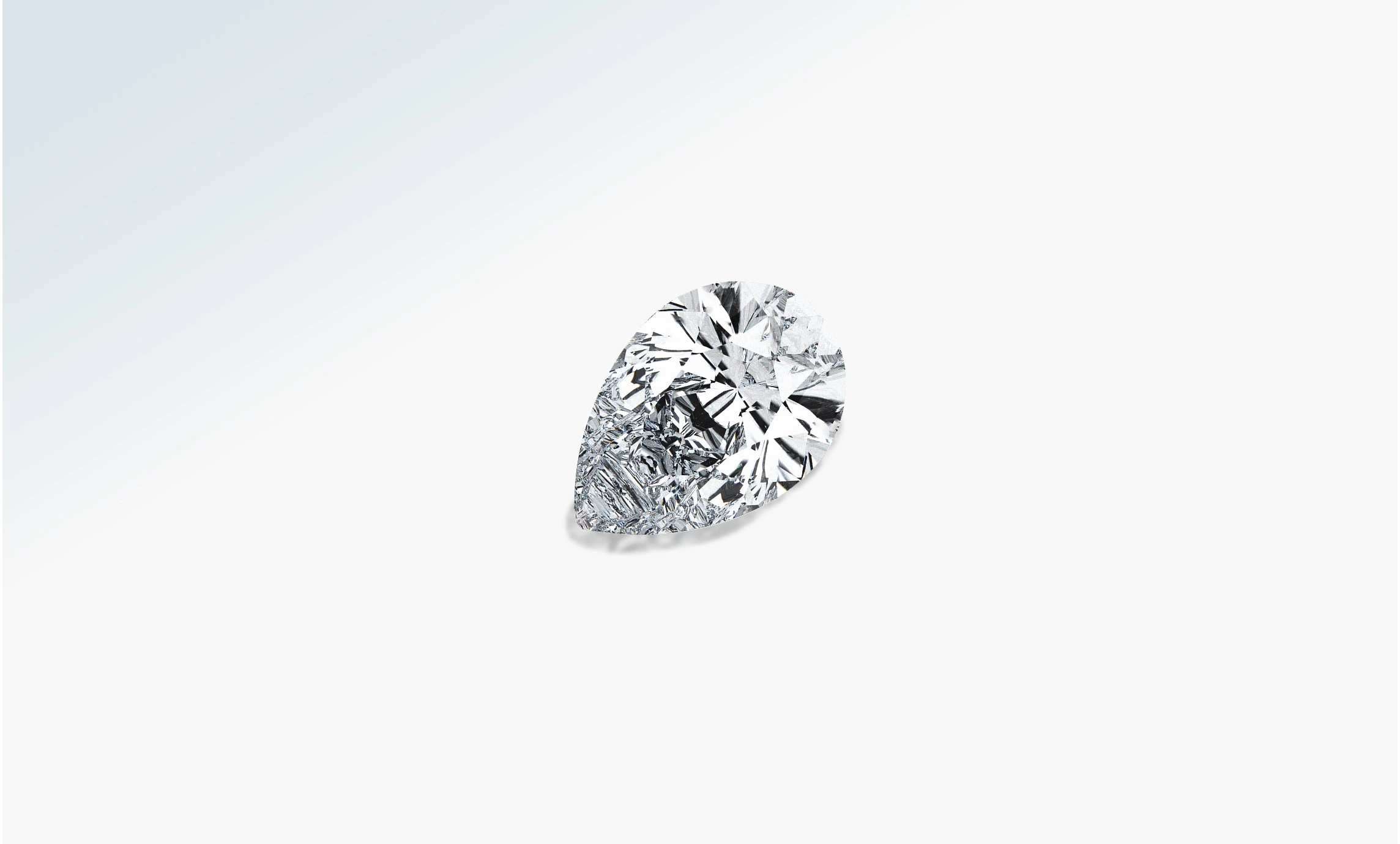
The pear shape brings together the rounded end of an oval and the tapered point of a marquise. Its asymmetry creates movement and an elegant directional line, making it a distinctive choice for engagement rings, pendants, and earrings.
A well-balanced pear should have graceful shoulders, a centered point, and two sides that mirror one another. The length-to-width ratio can range from softly rounded to slender and dramatic. Like other elongated brilliant shapes, pears may show a bow tie, so even brightness should be judged with the stone in motion.
Pear diamonds can be worn with the point facing toward or away from the hand, depending on the desired effect. The tip is the most vulnerable area and should be protected by a secure prong or bezel. Thoughtful orientation and setting design allow the shape to feel delicate without sacrificing protection.
Loose pear-shaped brilliant diamond on a pale background

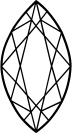
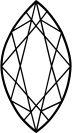
Marquise Diamond

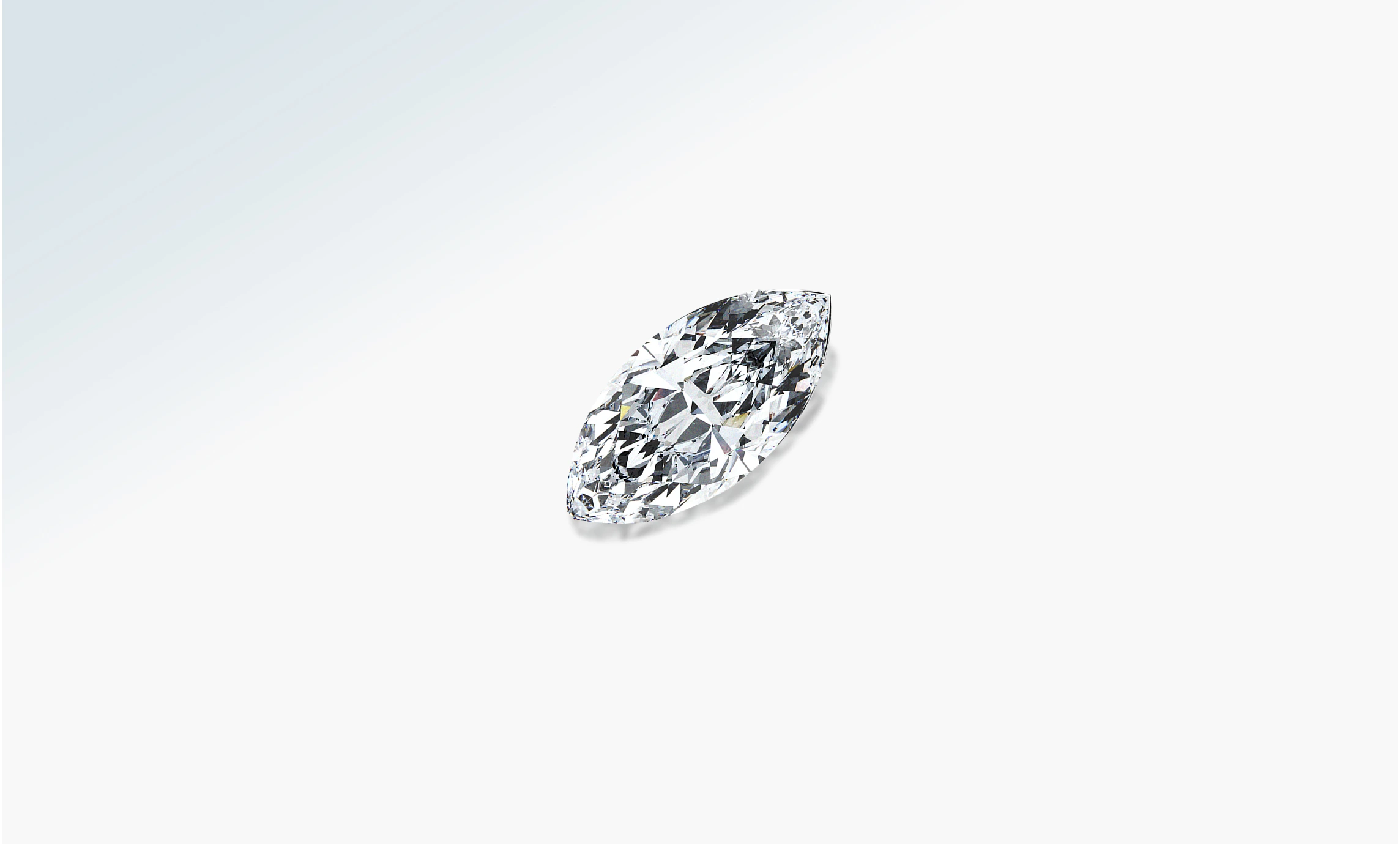
The marquise has an elongated body with two pointed ends, creating one of the greatest face-up spreads for its carat weight. Its long silhouette can make the diamond appear larger and create a dramatic lengthening effect across the finger.
Symmetry is essential. Both points should align, the sides should mirror each other, and the curves should feel smooth rather than overly narrow or swollen. A central bow tie is common, but it should not overpower the rest of the stone or remain dark in every lighting condition.
The pointed ends need protection because they are more vulnerable to impact. V-shaped prongs or a carefully designed bezel can secure them without obscuring the outline. Marquise diamonds suit north-south solitaires, east-west settings, and distinctive multi-stone arrangements for a look with unmistakable presence.
Loose marquise brilliant diamond on a pale background

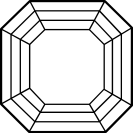
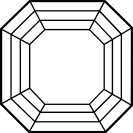
Asscher-Cut Diamond

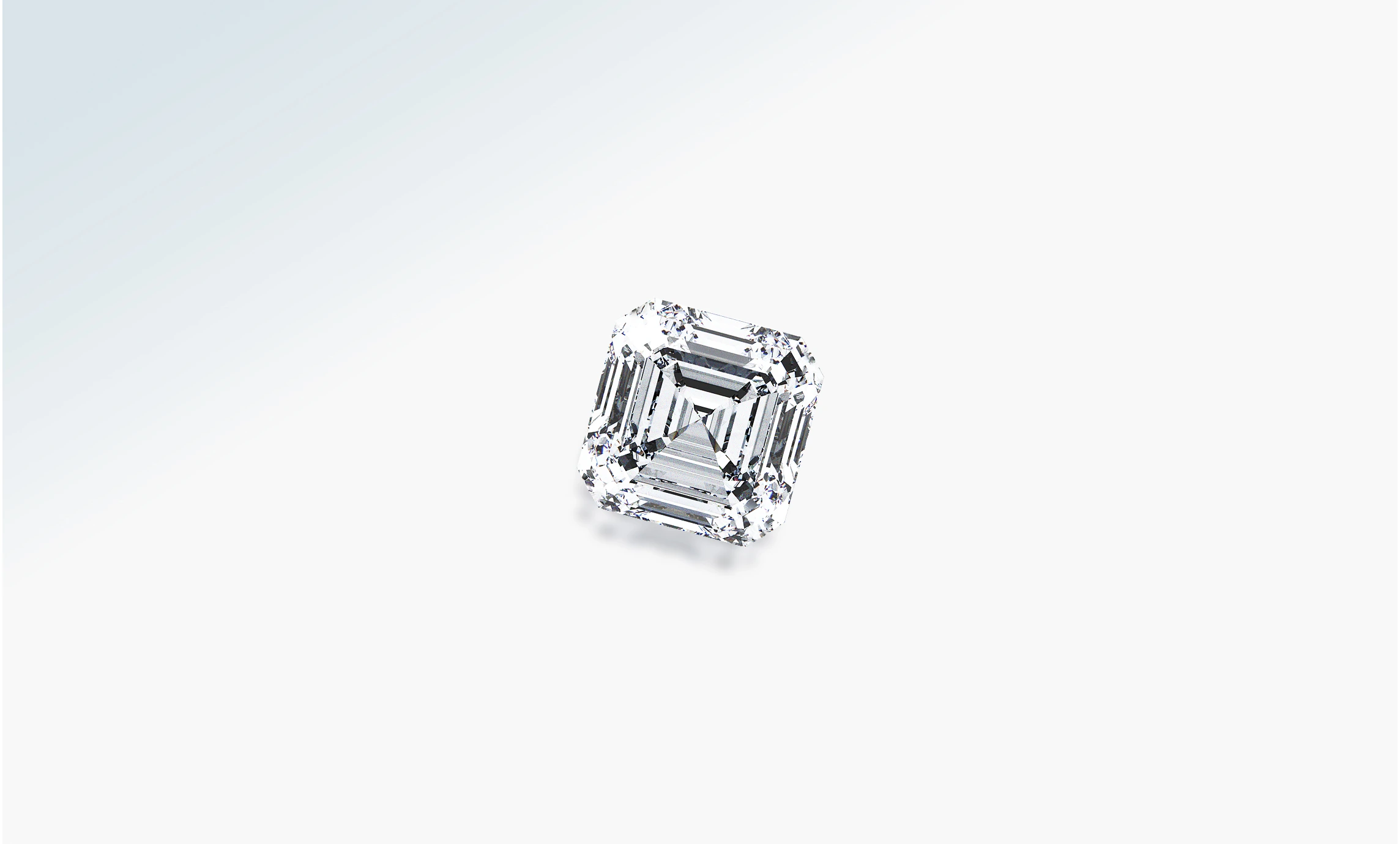
The Asscher cut is a square step cut with deeply cropped corners and a mesmerizing pattern of concentric reflections. Its geometry draws the eye inward, producing bold flashes and a hall-of-mirrors effect rather than the scattered sparkle of a brilliant cut.
Because the facets are broad and open, clarity, color, symmetry, and transparency deserve careful attention. A strong Asscher pattern should look centered and balanced, with crisp steps that remain lively as the diamond moves. Excessive depth can hide weight below the stone and reduce its visible size.
Asscher diamonds often appear slightly smaller face up than brilliant shapes of the same carat weight, but their depth creates a compelling sense of dimension. They pair naturally with geometric settings, fine halos, and tapered side stones, especially for someone drawn to Art Deco structure and quiet drama.
Loose square Asscher-cut diamond on a pale background

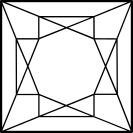
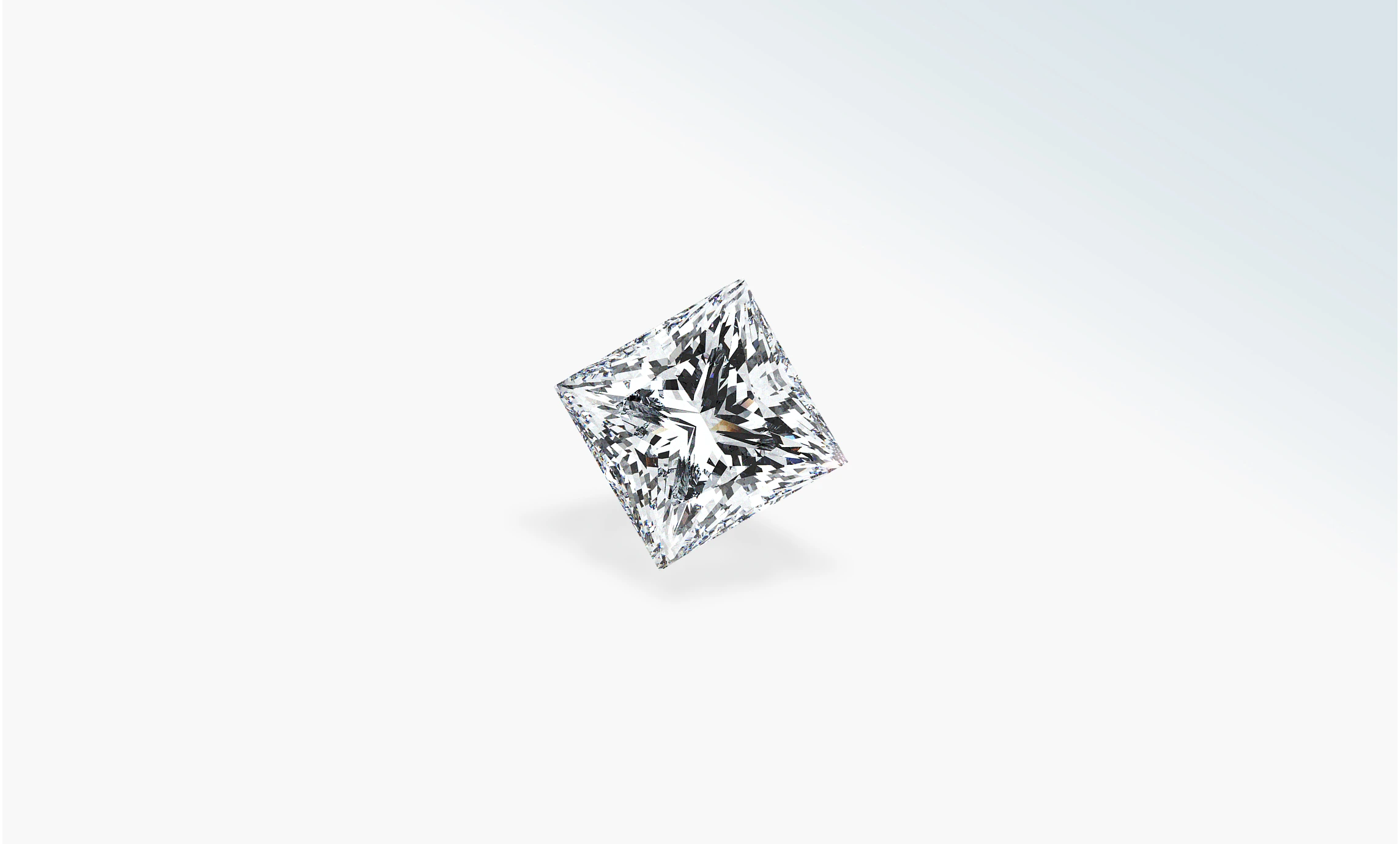
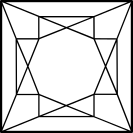
Princess-Cut Diamond

The princess cut is a square brilliant shape with sharp corners and strong, energetic sparkle. Its straight edges create a contemporary profile, while the brilliant faceting gives it more scintillation than a traditional step-cut square.
A balanced princess should have an even outline, appealing contrast, and brightness that reaches toward the corners. Some stones show two, three, or four chevron patterns when viewed from below, and these arrangements can change the size and movement of the visible flashes.
The four corners are both part of the shape's appeal and its most delicate points. A secure setting should protect each one, often with V-shaped prongs or a bezel. Princess cuts use rough efficiently, which can offer a strong face-up size and value for buyers seeking crisp geometry with brilliant light.
Loose square princess-cut diamond on a pale background

How to Choose Your Diamond Shape

Begin with instinct. Notice whether you are drawn to curves or straight lines, brilliant sparkle or broad flashes, symmetry or a more directional silhouette. Shape is one of the most personal diamond decisions because it is visible before any grade on a report.
Next, consider proportion and lifestyle. Elongated shapes can offer greater visual coverage, while pointed corners may require more protective settings. Step cuts reward clarity and transparency. Brilliant cuts often disguise inclusions more readily and emphasize scintillation. The ring design should support the strengths of the chosen stone.
Compare actual dimensions as well as carat weight. Shape and depth determine how large a diamond appears from above, so equal weights do not guarantee equal presence. View the stone in changing light and look for even brightness, balanced symmetry, and a facet pattern that remains engaging in motion.
The best diamond shape is not the one currently receiving the most attention. It is the one that continues to feel right after the first impression, complements the person wearing it, and gives the complete piece a character that feels unmistakably their own.
Use the 4Cs of diamonds to compare quality, see how each outline works across engagement ring styles, or explore available diamonds.